
Active vs Passive Income in Real Estate: Real estate is one of the most powerful ways to build wealth, generate cash flow, and acquire economic autonomy. Investors often ask one key query:
Which is better — active income or passive income in real estate?
The explanation depends on your plans, time, and risk forbearance.
What Is Active Income in Real Estate?
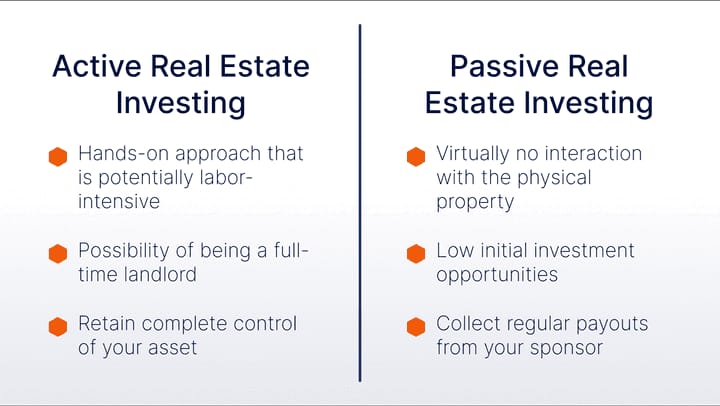
Active real estate income needs immediate involvement and continuous action. Your revenues depend on the period and mastery you invest.
Best Active Real Estate Income Methods
- Property Flipping
Buy undervalued possessions, refurbish, and sell at a more elevated price
High profit possibility but higher risk
- Real Estate Development
Land investment, construction, and undertaking deals
Popular in appearing real estate markets
- Self-Managed Rental Belongings
You handle tenants, supervision, and rent collection
Higher cash flow, but time-consuming
- Real Estate Agent or Broker
Earn empowerment from buying and dealing in property
Income depends on demand activity
Pros of Active Real Estate Income
Faster income generation
Higher quick-term profits
Full authority over investments
Cons of Active Real Estate Income
Directs daily involvement
Stress and operational risk
Income stops if you stop performing
What Is Passive Income in Real Estate?
Passive real estate income allows investors to earn a steady income with minimal day-to-day involvement. It’s ideal for long-term assets creation.
Best Passive Real Estate Income Strategies
- Rental Properties with Property Management
Monthly rental income with experienced management
Stable and predictable cash flow
- Buy and Hold Real Estate Investment
Buy property in high-growth areas and hold long-term
Earn from rent and funds appreciation
- Real Estate Investment Trusts (REITs)
Invest in income-producing belongings without possessing them
Low entry barrier and high liquidity
- Real Estate Crowdfunding
Invest small portions in large projects
Diversification with low effort
Pros of Passive Real Estate Income
Monetary freedom and time flexibility
Long-term wealth construction
Easier to scale
Cons of Passive Real Estate Income
Slower returns originally
Limited control
Requires forbearance
Active vs Passive Income in Real Estate (Comparison Table )
| Factor | Active Income | Passive Income |
| Time Required | High | Low |
| Risk Level | High | Medium to Low |
| Cash Flow Speed | Fast | Slow but steady |
| Long-Term Stability | Low | High |
| Financial Freedom | Limited | High |